Ring Styles
Yellow Gold vs. White Gold vs. Rose Gold: Which Metal Actually Fits Your Style?
Metal color is one of the most personal decisions in engagement ring design. Unlike stone shape, which has some functional differences, metal choice is almost entirely about aesthetics — and aesthetics are entirely about you.
Here's how to think through each option honestly.
Yellow gold
Yellow gold is the traditional choice and, right now, it's having a genuine moment. After years of white metal dominance, yellow gold has come back strongly — and not just because it's trending. It suits warm skin tones particularly well and has a warmth that white metals simply don't.
The appeal: it looks rich, it photographs beautifully, and it has an organic feel that suits vintage and nature-inspired designs especially well.
The consideration: yellow gold shows scratches more visibly than white metals. Most fine jewelry in 14k or 18k gold will develop a patina over time — some people love this, others prefer to keep things bright. It can be polished, but it requires occasional maintenance.
Best for: warm or olive skin tones, people drawn to vintage aesthetics, anyone who finds white metals cold or clinical.
White gold
White gold is yellow gold alloyed with white metals (typically nickel or palladium) and then plated with rhodium — which is what gives it that bright, silvery appearance. It's the most popular engagement ring metal in the US for the past two decades.
The appeal: it's versatile, it suits a wide range of skin tones, and it photographs cleanly. It also tends to make diamonds look brighter and more colorless.
The consideration: the rhodium plating wears off over time (typically 1–2 years with daily wear), at which point the ring needs to be re-plated to maintain its appearance. It's an easy and inexpensive process, but it's worth knowing it's recurring.
Best for: cool or neutral skin tones, people who want versatility with other jewelry, those who prefer a clean, modern look.
Rose gold
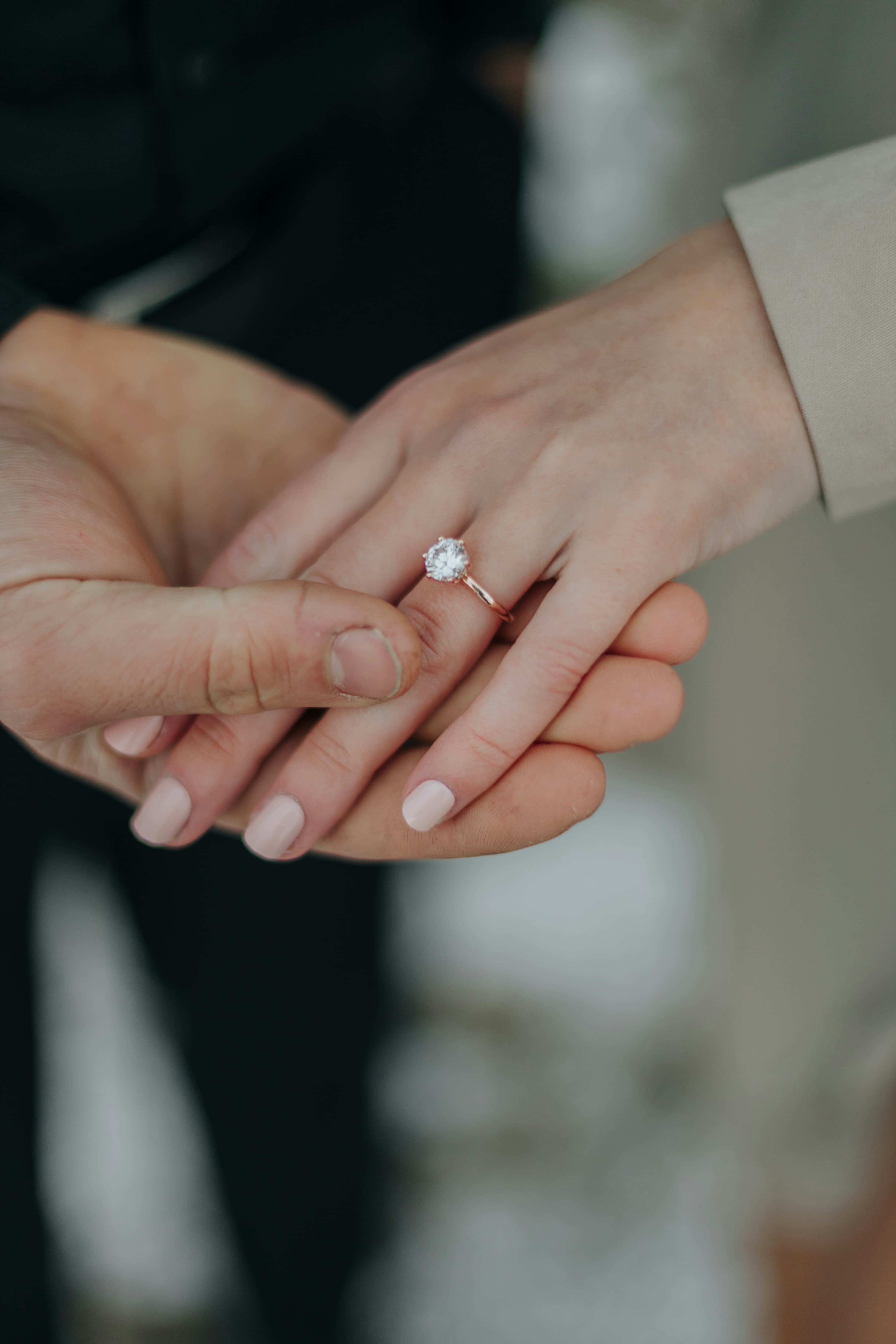
Rose gold — yellow gold alloyed with copper — has a warm, pinkish hue that's softer and more romantic than the other options. It became widely popular in the 2010s and has retained a strong following.
The appeal: it's distinctive without being loud, it photographs warmly, and it suits a wide range of skin tones. It pairs beautifully with vintage and delicate settings.
The consideration: rose gold cannot be re-plated the same way white gold can, since its color comes from the alloy itself rather than a coating. It's also higher in copper content, which can occasionally irritate sensitive skin (rare, but worth knowing).
Best for: people drawn to romantic or vintage aesthetics, those who want something a little different, warm and cool skin tones alike.
The practical test
Look at the jewelry you already wear every day — watch, bracelets, earrings. What metal do you default to? That's usually a reliable signal.
If you wear mixed metals, you have more flexibility than you think. The ring is going to be on your hand alongside a wedding band eventually, so it helps to think about what you'd pair it with.
And if you're still unsure: most reputable jewelers will let you try on rings in different metals before committing. It's worth doing.
Ready to drop your hint?
Try HitchHint free